Transformation strategy · AI-native transformation
The Four Stages of AI-Native Enterprise Transformation: A CHRO’s Guide
A practical maturity model for HR leaders: move from individual AI tool use to coordinated hybrid teams, then carefully governed outcome-driven improvement.
HRPRESSEditorial presentation
HRPRESS · Animated editorial insight
From AI tools to reliable outcomes
Original editorial insight · English synthetic narration · Proposed management frameworkDownload video
Why a two-stage model is not enough
Many organizations distinguish individual productivity from organizational productivity. That is useful, but it leaves HR leaders unsure what to build next. The supplied transformation framework separates each phase into two stages, using the coordination of work and the source of improvement as the dividing lines.
The four stages
Stage 1 is human-coordinated productivity: employees use AI tools, but personally assemble information and hand outputs between them. Stage 2 is agent-coordinated productivity: an agent becomes the main interface for a person's work, using connected tools and relevant context.
Stage 3 is organizational productivity: an agent-supported team completes a multi-step business outcome that previously required substantial coordination between departments. The organization captures verified human expertise as reusable knowledge and skills. Stage 4 is evidence-driven improvement: the system proposes refinements based on measured business results and authorized external evidence, within approved limits. This fourth stage is a frontier, not a claim that unrestricted autonomous evolution is available.
What the CHRO should do
Assess five dimensions: individual capability, team collaboration, data, infrastructure and semantic context. Agree what evidence would justify moving each dimension forward. A successful demonstration in one department does not establish enterprise maturity.
Start with a single valuable workflow, identify its bottleneck and agree an outcome metric with its business owner. HR owns capability development and work design alongside technology and operational leaders. The aim is not to maximize agent usage; it is to strengthen the organization's ability to deliver reliable outcomes.
HRPRESS · editorial insights
Five takeaways from the four-stage AI transformation model
Original editorial summaries of the proposed framework, not attributed quotations or measured results.
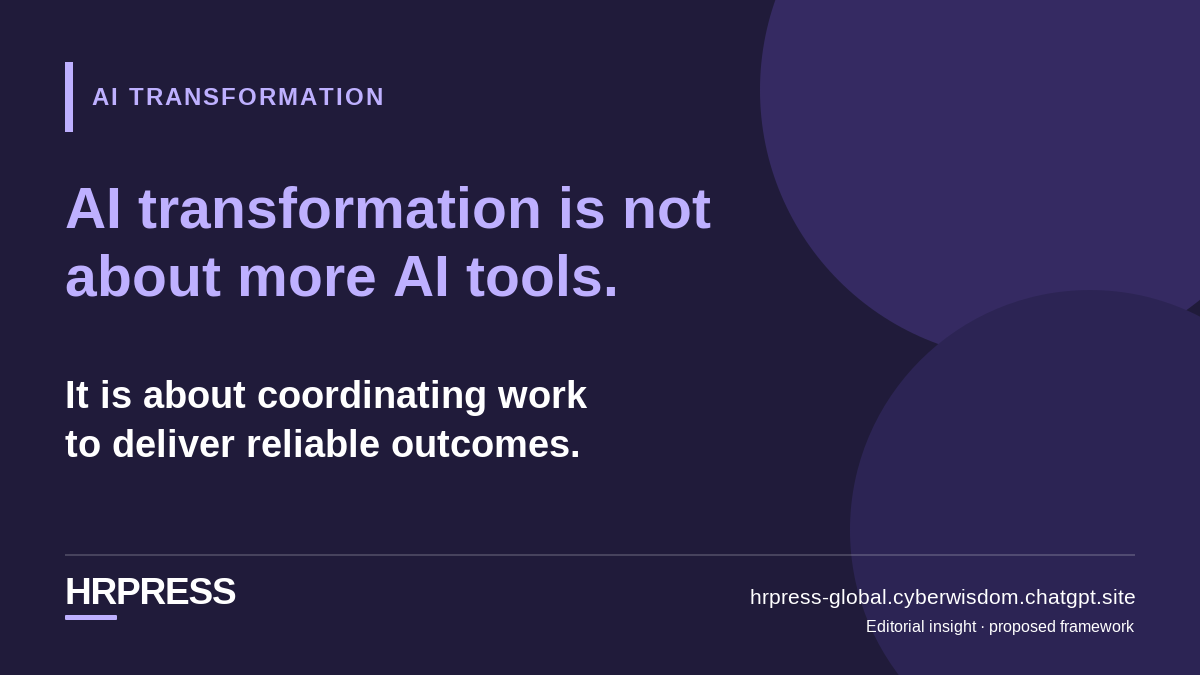
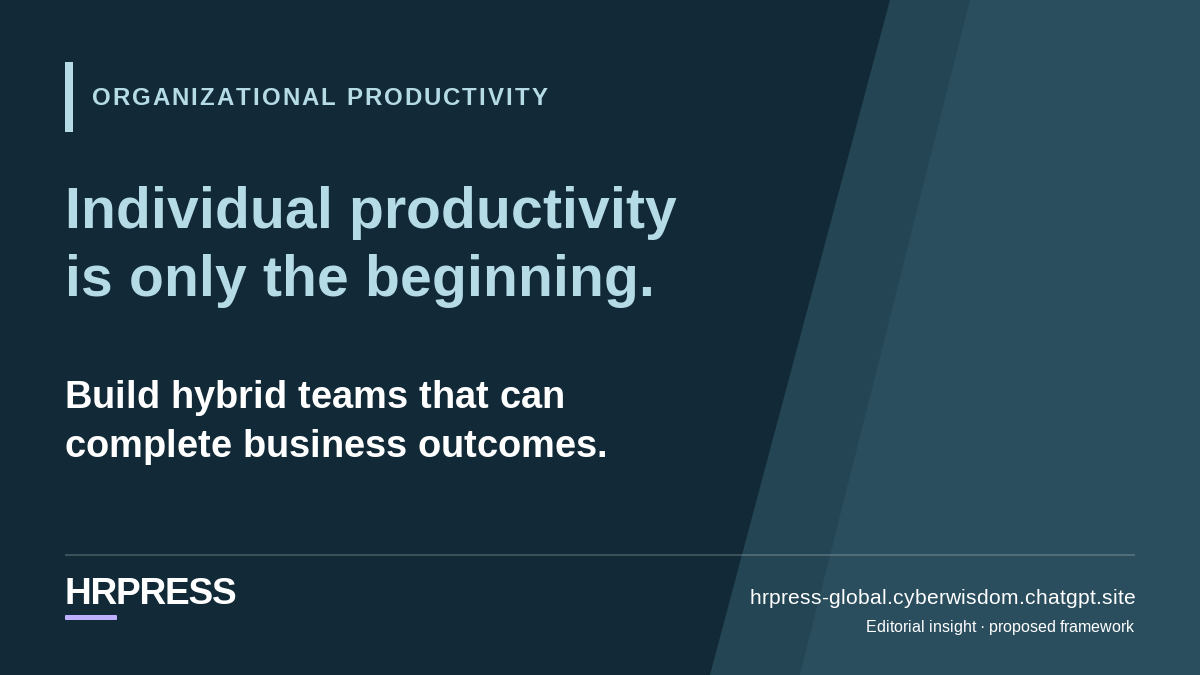
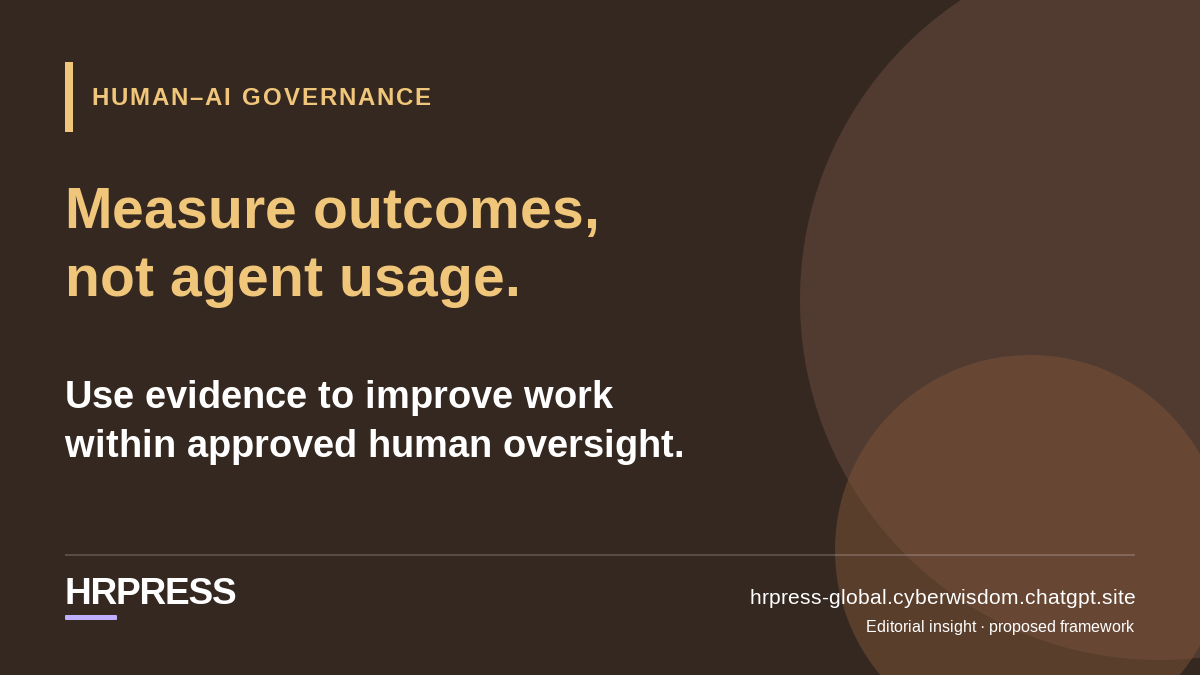
Agent-coordinated work is a new operating model, not just a new interface.Connected tools and relevant context must support a defined human task.
A successful pilot does not establish enterprise AI maturity.Assess capability, collaboration, data, infrastructure and semantic context separately.
Questions HR leaders can ask about AI-native transformation
What are the four stages of AI-native enterprise transformation?
The proposed model progresses from human-coordinated AI tool use, to agent-coordinated individual productivity, to organizational productivity, and finally to evidence-driven improvement within approved limits.
How can HR leaders measure organizational AI readiness?
Assess individual capability, team collaboration, data, infrastructure and semantic context. Require evidence for each dimension before describing an organization as ready for the next stage.
How should CHROs introduce AI agents into hybrid teams?
Start with one valuable workflow, define the accountable business owner, establish an outcome metric and validate accepted work before expanding delegated tasks. Human oversight and employee rights remain essential.
Editorial note
Adapted from a supplied transformation discussion. The stages and examples are proposed management guidance, not independently verified client results. Human accountability and employee rights remain essential.